
Project information
- Name: Customer Segmentation on Retail Data
- Type: Personal
- Project date: 07 Feb,2023
Customer-Segmentation-on-Retail-Data
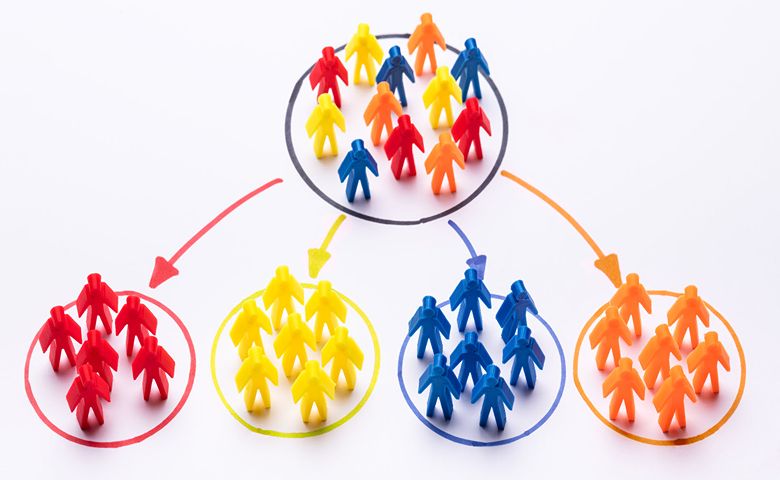
- About - This is a customer segmentation projects which aims to predict on which cluster the customer belongs depending on the spendings and other entities.
- Problem statement - Using unsupervised learning, divide the customers using diffrent clusters by analysing the behaviour, spending and other entities of a customer purchase.
- Appraoch - RFM Analysis :- The “RFM” in RFM analysis stands for recency, frequency and monetary value. RFM analysis is a way to use data based on existing customer behavior to predict how a new customer is likely to act in the future. An RFM model is built using three key factors:
1.how recently a customer has transacted with a brand
2.how frequently they’ve engaged with a brand
3.how much money they’ve spent on a brand’s products and services
After getting these important insights, we used the kmeans clustering algorithm for creating cluster based on the monetary, recency and frequency values.
- Conclusion - Using the elbow method, we came to know that 3 as the value of k is the best cluster distribution for our data. Here is the analysis of clusters :
1.Cluster 0 - Rare Customers, low purchase frequency and minimal spending
2.Cluster 1 - Frequent Customers, high purchase frequency and highest spending
3.Cluster 2 - Frequent Customers, low purchase frequency and less spending